

Residential lighting
Garden lighting
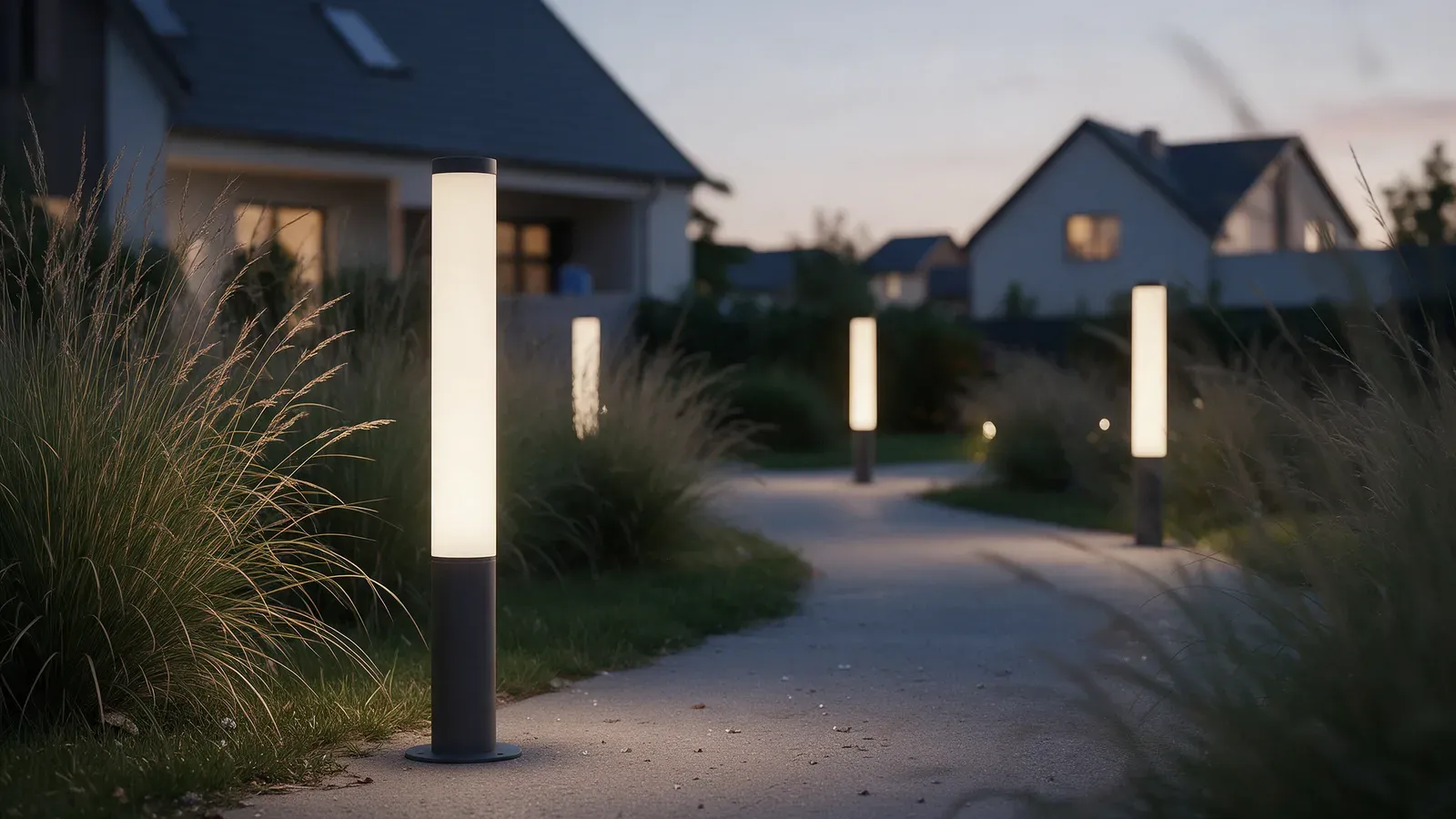
A garden at night is another space. Light follows the route, reveals the planting and lets whatever needs no leading role rest.
The starting point
The garden is walked in the dark.
At night the garden is discovered step by step. Light marks the way and builds depth without turning every shrub into a shop window.
- Route
- Planting
- Seating
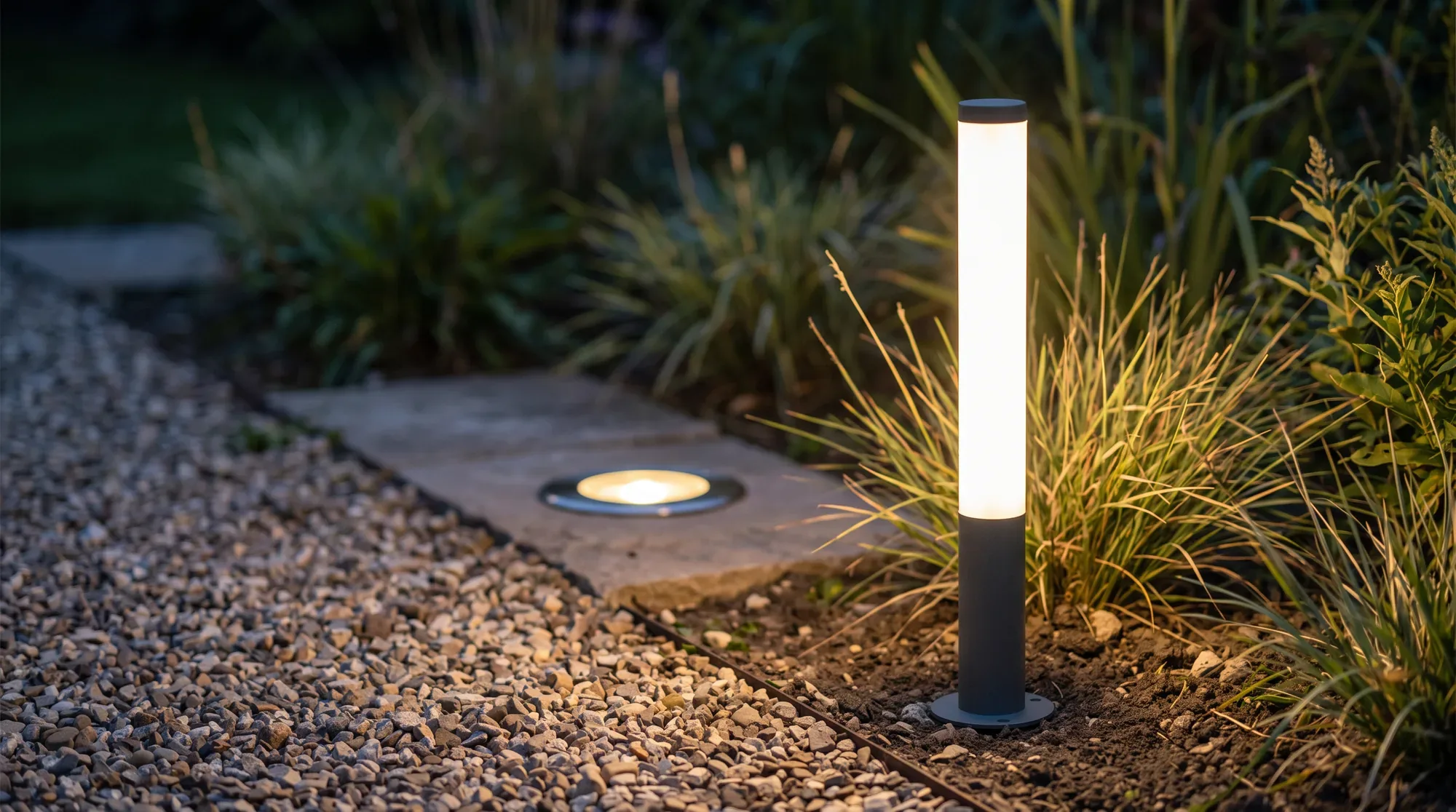
What is lit
The path and accesses are the base: they allow safe movement and understand the garden as a route. Places to sit come next, where light can be lower and warmer.
Planting and boundaries complete the picture. A tree, a hedge or a wall can receive different light from the path, provided the whole does not lose unity.
What the project decides
The type of planting, paving materials and level changes condition where each point goes and at what height. Exposure to water and dust matters too, as part of any outdoor setting.
Routes and uses take precedence over composition. Before deciding what to light, it is worth knowing where people walk and where they stop.
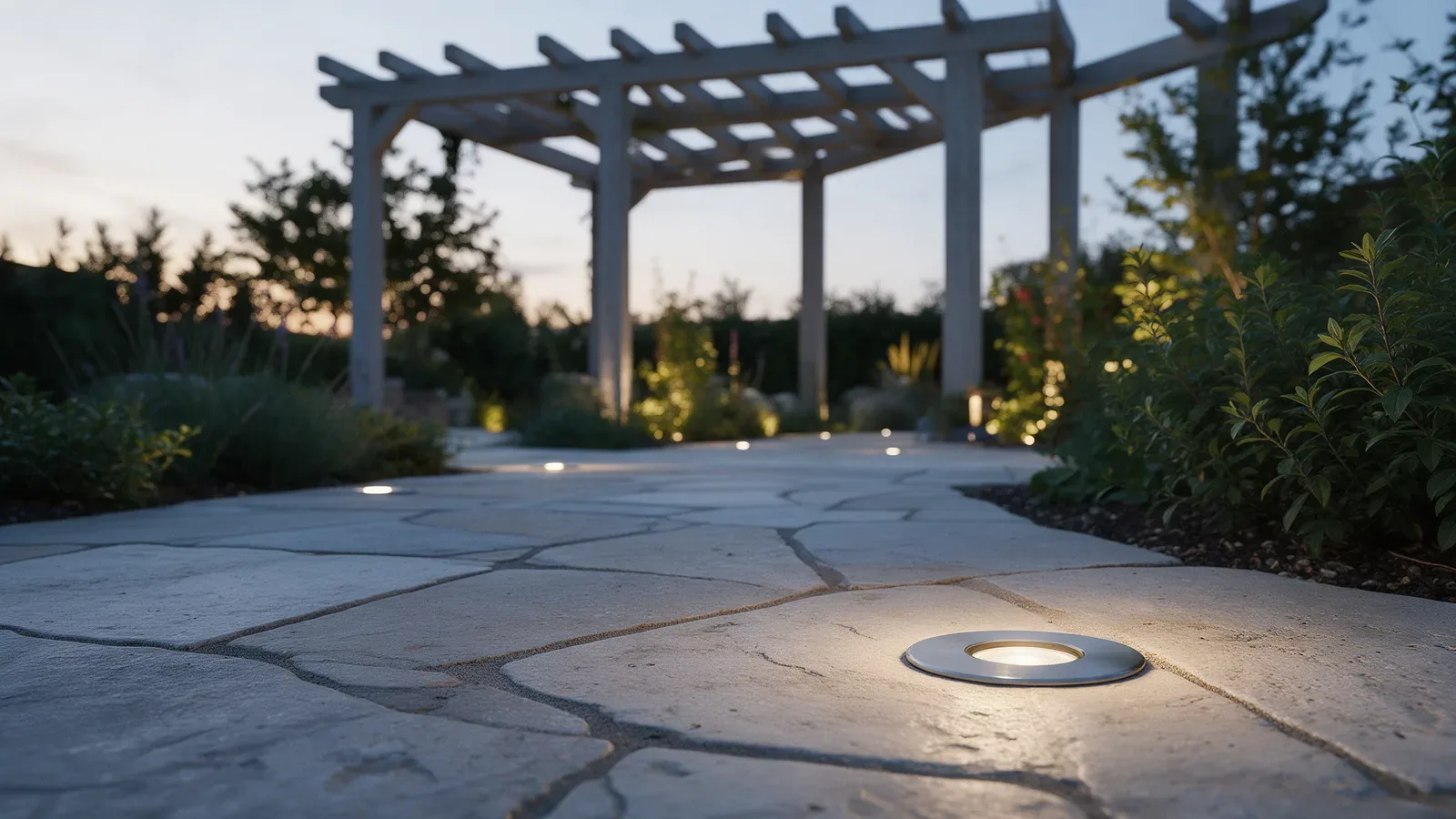
Pieces integrated into the paving or set low draw the route without adding a visual presence that competes with the planting.
How it is approached
The work starts from the garden plan, the routes and the main species. On that basis the layers are ordered: guidance, seating and planting accent.
Alternatives are reviewed with the technical team and adjusted to the real height of the plants and the ground materials. The page prepares the conversation; it does not replace a trial in the garden.
What to avoid
- Lighting the whole garden, placing visible sources on the path and aiming light towards neighbouring homes break the atmosphere and cause nuisance.
- It is also worth avoiding light that prevents you from seeing the sky. A garden at night needs areas of visual rest.
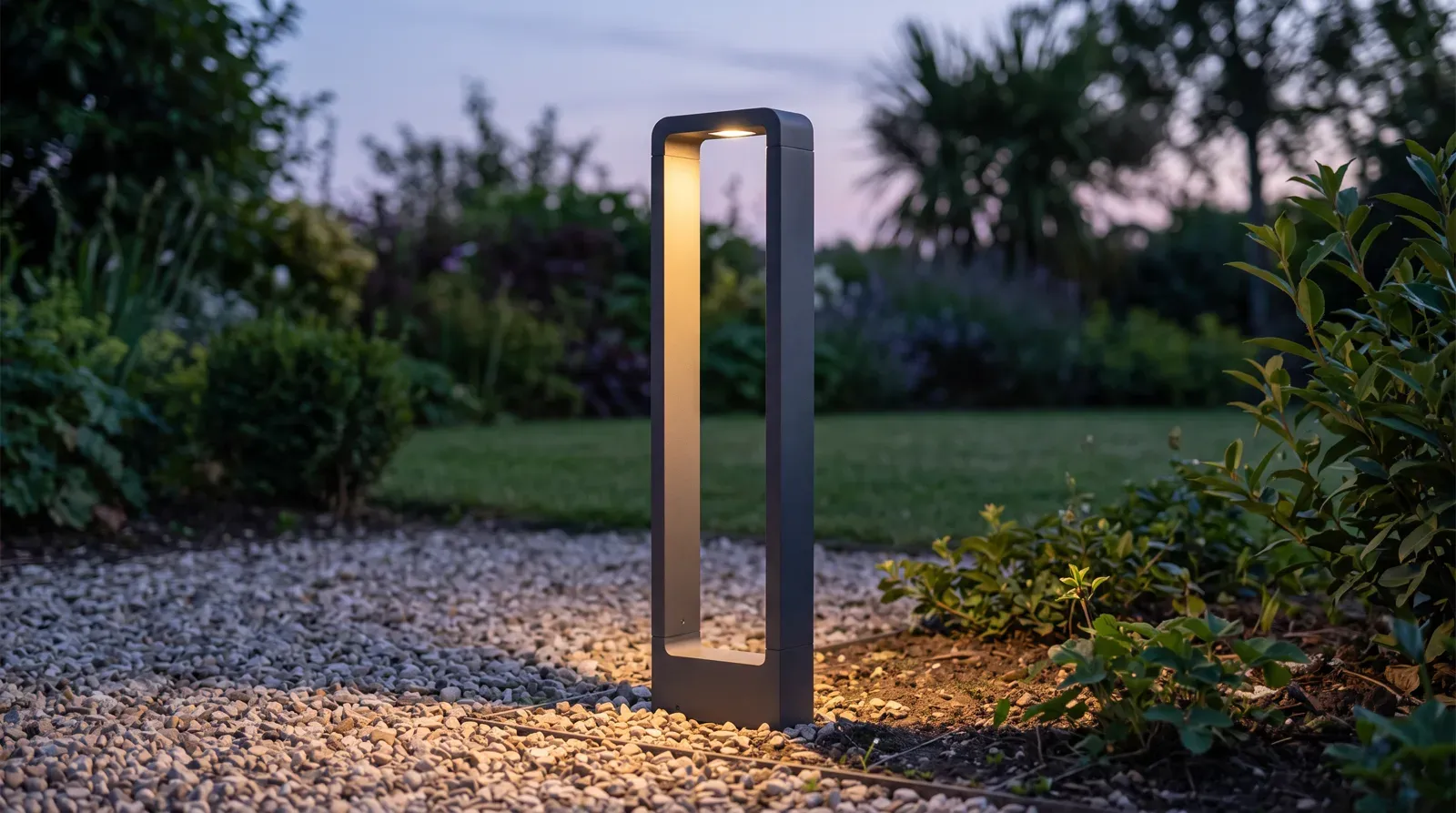
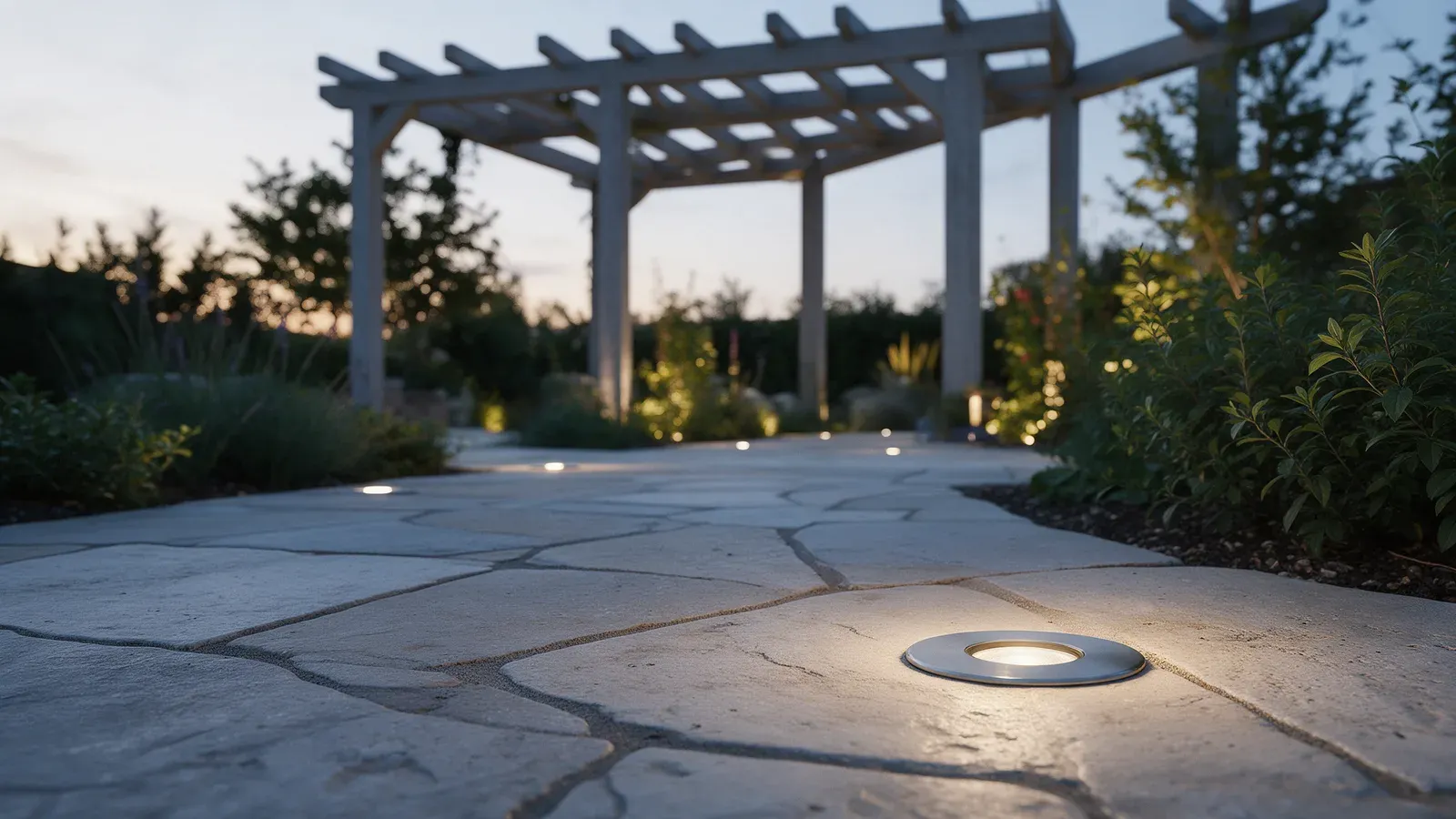
Pieces for the outdoors.
Real Conalux catalogue families. The choice is defined with the project's technical team.
What about your project?
From architectural intent to selecting solutions, talk to Conalux about your spaces and how they will be used.
The context
State whether it is a new-build or refurbishment project, along with the spaces involved and intended uses.
The integrations
Identify the ceilings, joinery and outdoor areas that need to be considered.
The project information
Gather available plans, known constraints and useful information before the discussion.
Frequently asked questions
What information should be gathered to start?
The garden plan, intended routes, the main species and paving materials. The position of boundaries with neighbouring homes matters too.
Can only the path be lit?
Yes. The route is a common base for the project; whether seating areas or planting need another layer of light is decided afterwards.
How is light integrated into the garden?
With low or paving-integrated pieces, aimed to avoid visible sources at eye level. Position is adjusted to the real plants and materials.
Your garden, in the catalogue
Conalux brings together the solutions and advice to prepare the lighting for your garden.
Explore Conalux solutions